Running a fund means making investment decisions, building investor relationships, and managing a business—not reconciling accounts or filing regulatory paperwork. That's where fund administration comes in.
A fund administrator handles the tasks that keep your fund’s accounting and reporting accurate and compliant: everything from NAV calculations and tax filings to investor onboarding and regulatory reporting. And while it might seem like a support function, the quality of your fund administration has a direct impact on your ability to raise capital, retain investors, and effectively scale your fund.
Here's why your fund administrator matters more to the success of your fund than you may think.
What Is Fund Administration (and What Does It Cover)?
Fund administration is an outsourced service responsible for back-office financial and administrative tasks for investment funds including hedge funds, digital asset funds, private equity, venture capital, and real estate funds.
A fund administrator will handle operational tasks including fund accounting, investor reporting, compliance, and financial statement preparation.
Common fund administration responsibilities include:
- Fund accounting: Providing financial records and statements for auditors
- NAV reporting: Daily or monthly Net Asset Value (NAV) calculations for traditional or digital assets
- Compliance: Support for common regulatory filings in your fund’s jurisdiction, investor identification, tax reporting
- Investor services: Providing account statements and investment disclosures, handling investor inquiries, and distributing reports and communication to investors
- Transfer agency services: Investor onboarding including anti-money laundering (AML) and Know Your Client (KYC) regulations, handling capital calls, distributions, and share redemptions, recordkeeping
- Allocation services: Calculating complex fee setups including incentive fees, preferred returns, and waterfall structures, and for digital assets, allocating block trades fairly across accounts.
- Tax services: Some fund administrators offer tax support including withholding and reporting; Schedule K-1 and K-3 preparation; and PFIC, CFC, and FDE compliance.
Why Fund Administration Is Important for Fund Operations
As a fund manager, you need to spend more time managing and growing your business—attracting investors, making investment decisions, and constructing a portfolio—and less time on back-end functions.
Fund administrators are specialized third-party vendors dedicated to the accounting and reporting functions that you need to keep your fund running smoothly, so they’re normally able to deal with any unique or complex requirements your fund may have. These days, fund administrators handle increasingly complex tasks, like global compliance and tokenization support.
Hiring a fund administrator is often more cost-effective than hiring an in-house team, and although you may not be able to oversee every operation yourself, good fund administrators are responsive and offer transparent systems that give you regular access to your financial reports.
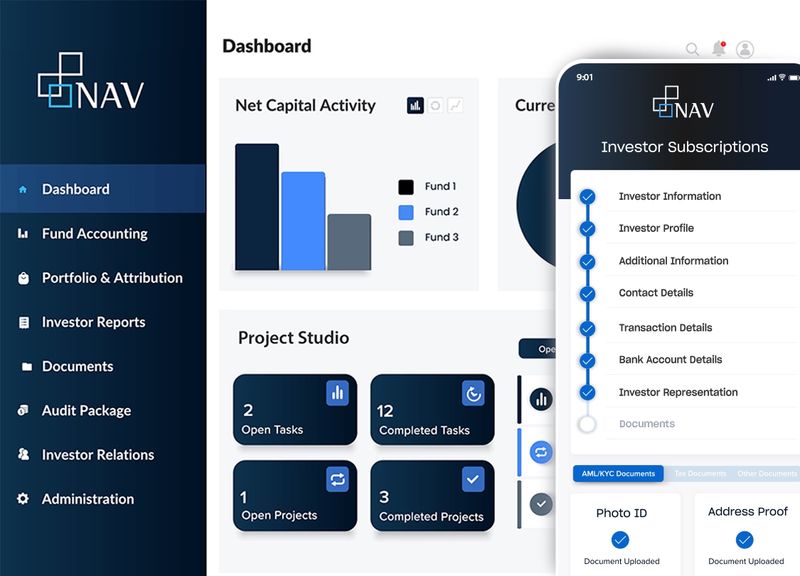
Fund administrators often have portals that can elevate the offerings of your fund. You can white-label the portal and give investors access to financial statements and fund reports at any time. Most of these portals are web-based, and a few fund administrators even offer mobile apps.
5 Ways Fund Administration Directly Drives Fund Success
A reliable fund administrator can impact your fund’s performance in ways you may not have realized.
NAV Calculation Accuracy
The accuracy of your NAV calculations is a critical fund success factor and can impact financial outcomes, regulatory standing, and investor confidence. You need accurate NAV calculations that are delivered quickly, with little-to-no inaccuracies, and responsive customer support if you have any questions about valuation.
The best fund administrators will offer you daily NAV estimates, giving you the option to monitor transactions all month long to make month-end reconciliation faster and easier. Your fund administrator should have multiple review stages for month-end reporting, and reliably deliver your monthly accounting reports in a handful of days after close-of-month. For example, NAV Fund Services delivers month-end reports within 2 working days for 80% of its funds.
When investors receive accurate, on-time reports, they can trust their capital is being handled well, and that increases the perception that you’re a reliable and professional manager.
Regulatory Compliance
A major function of fund administrators is regulatory compliance. While you are ultimately responsible for making sure you’re in compliance with applicable laws in the jurisdictions where your funds are domiciled, a good fund administrator can help you make sure you’ve dotted your “i”s and crossed your “t”son due diligence and regulatory filings.
Fund administrators will offer AML and KYC due diligence during the investor onboarding process, cross-referencing investors against global databases like the OFAC SDN or World Check for illegal activity. Some administrators will offer risk-based monitoring for investors, letting you know if an investor could pose an elevated risk or be politically exposed, and if new changes arise.
Your administrator can also help you file commonly required regulatory filings, like Blue Sky, FATCA/CRS, and ERISA, plus stay on top of newly introduced regulations so your firm is up-to-date with the latest requirements.
Investor Transparency
For investors, having a well-regarded fund administrator in place signals a transparent corporate governance structure. Fund administrators are an independent, second set of eyes on a fund’s bookkeeping. Institutional investors will often only invest in funds with third-party fund administrators as a condition of their risk management policies.
Fund administrators offer another layer of accountability, acting as your partner in moving capital to and from investors and providing oversight to the fund’s operations. And they allow your investors access to their financial reports and other data, often around the clock through investor portals, so they can independently verify their portfolio valuations and performance metrics.
Faster Fundraising
Hiring fund administrators can speed up fundraising in several ways. Your fund administrator can provide services to help you prep for fundraising, like track record building and draft offering document review.
Offloading back-office operations to a fund admin also allows you to focus more of your time on building relationships with investors.
An outsourced administrator can also make you look more attractive to more experienced investors, not only through the fiscal oversight it provides, but through an integrated platform experience. When investors receive accurate and on-time reporting, that reflects well on the fund.
Certain investors may demand incentive or management fees, and a top-notch fund administrator can easily factor different fee structures into accounting calculations.
Another plus: if you hire a fund administrator that provides excellent value, you can pass those operational savings on to your investors, a powerful selling point.
Scalability
The right fund administrator can drive growth for start-up funds. Fund administrators that typically work with smaller funds offer customization and efficiency scales usually reserved for much larger firms. Emerging manager fund administrators will often delay invoicing until after the first live reporting, which can help with cash flow in the hectic early days of getting a fund off the ground. They can also provide services like bank account opening to get your fund running quicker.
If you’re considering expanding your fund into global markets, a fund administrator can help you navigate local regulatory requirements and operational challenges.
For digital asset firms, you may have a variety of API needs if you’re using data warehouse or third-party technology providers, or utilizing smart contracts. A fund administrator that is adept at emerging funds in the digital asset space can help you integrate investors in DeFi or centralized exchanges. NAV Fund Services supports more than 150 exchange integrations and over 200 blockchain connections.
Many fund administrators offer different levels of service, say, only providing dedicated account managers when funds reach a certain size. Some fund administrators will only work with funds of a certain size, such as $100 million or more of AUM. But the best admins will offer strong service from day one. NAV Fund Services, who regularly works with emerging managers, offers dedicated account managers from day one, with an average of 15 years of experience in fund administration.
It’s important to note, though, that not all fund administrators can scale with you. While some have the proprietary technology and customization available to meet your scalability needs, many fund administrators designed for start-ups can’t always keep pace with the growth of your fund.
The Hidden Cost of Poor Fund Administration
Poor fund administration has direct costs, like the expense of resource-heavy, slow-to-integrate manual fund accounting. But its hidden costs are more pernicious, with minor errors in reporting or compliance eroding investor confidence over time. Problems with inaccurate valuation and a loss of investor confidence came into play with the collapse of a large American mutual fund in 2021 and a well-known UK investment manager’s fund in 2019.
NAV reporting or other accounting delays can cause inaccurate financial statements, complicate your tax filings, and trigger delays in decision making that can affect a fund’s investment decisions.
What to Look for in a Fund Administration Partner
You want to identify a fund administrator that will meet your unique needs. Not every fund administrator is willing to take on emerging funds, or has the capabilities to scale with you. If you have a crypto fund or want to offer tokenized assets, you’ll need to pick an admin capable of integrating your API keys and wallet addresses securely.
Here are a few key features to prioritize in your fund administrator:
- Technology: Does your admin use proprietary software? Are self-service portals offered for management and investors? You want to make sure your administrator’s technology is compatible with your fund’s software or other outsourced systems.
- Client Service: Is your fund administrator quick to respond to your needs? Do you work with a dedicated account manager? How late in the day can you get queries answered if your admin uses offshore support?
- Compliance and Regulatory Experience: Does your admin have the experience to handle your fund’s reporting requirements, whether local or global? Ask about your fund’s investor onboarding process and whether it complies with risk-based policies like AML and KYC. Your admin should also be a specialist in the accounting standards and tax laws of the region where your fund is domiciled.
- Data Security: What does your admin do to safeguard sensitive client data or respond to security issues? What types of encryption and authentication measures are in place? Is sensitive information held in on-site data warehouses or outsourced?
- Pricing Structure: Does your fund administrator provide a transparent, straightforward pricing model? You don’t want surprise costs or hidden fees to pop up later.
- Alternative Assets Experience: If you’re an alternative assets manager, choose an admin with deep experience in this space. NAV Fund Services has been working in the digital assets space since 2017.
Frequently Asked Questions
1Should I handle fund administration in-house or outsource it?
Managing admin in-house might save money initially, but outsourcing fund administration to a dedicated service provider can save you headaches in the long run and provide unexpected benefits. You’ll generally get faster, more accurate fund accounting, and investor onboarding.
2What do fund administrators actually do?
Fund administrators are service providers who manage accounting, including daily NAV calculations, answer investor questions, manage distributions and capital calls, and prepare financial statements for investment funds.
3How can a third-party fund administrator help start-up funds?
A third-party fund administrator can help start-up funds by helping a fund set up a bank account, onboard investors, signal credibility and transparency to large investors, help with tax preparation, review offering documents, and draft financial statements.